




MIDEA 7.6L Pressure Cooker: The One Pot That Actually Replaces Nine

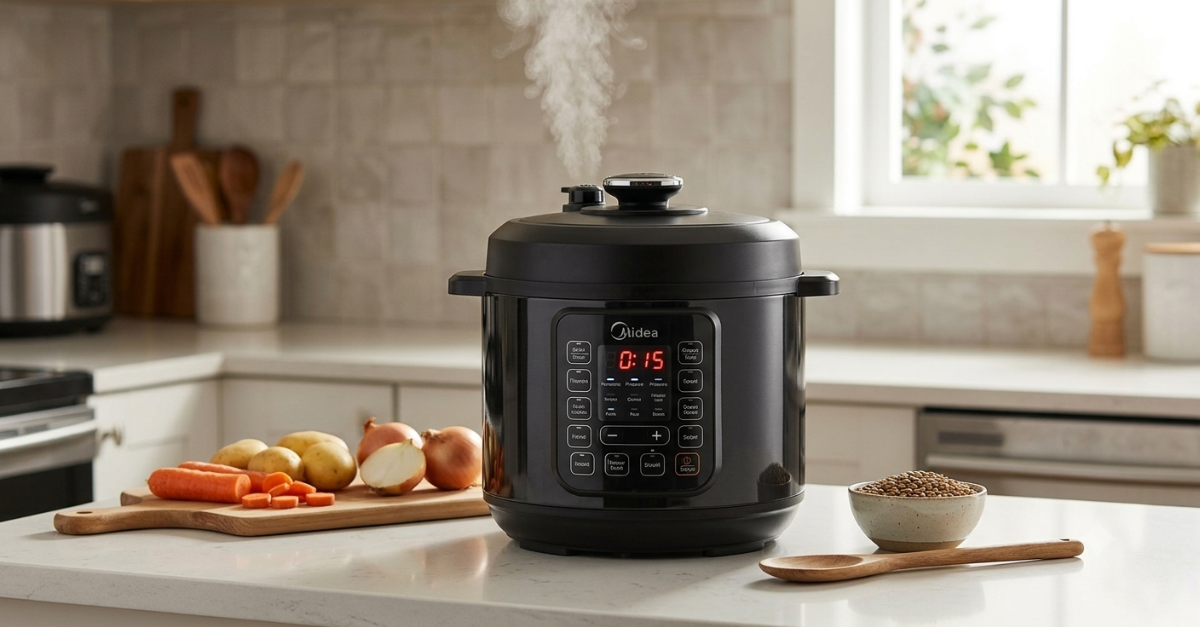
Most kitchens have a drawer or a cupboard full of gadgets nobody uses after the first month. A slow cooker sits in the back. A yogurt maker collects dust on top of the fridge. A rice cooker takes up counter space it barely earns. The MIDEA 7.6L Pressure Cooker was made to fix exactly this mess, and it does it without asking anyone to learn ten new machines.
This pot does the job of nine separate appliances, and it does it in one body that fits on a normal kitchen counter. If you cook for a family, batch meals for the week, or just hate washing five different pots after dinner, this is worth a proper look. Why buy nine machines when one does the same work?
Quick take before you go further:
Good for: families, batch cooking, anyone replacing multiple gadgets with one
Skip if: you cook for one person and rarely use more than a rice cooker
Standout features: 9-in-1 function, 12 presets, 10 safety features, 24H delay timer
Main catch: bigger and heavier than a basic pressure cooker
What Makes This Pot Different
Plenty of pressure cookers exist. Some are cheap and basic. Others cost a fortune and still only do two things well. This appliance sits in a strange sweet spot: it costs less than most premium multi-cookers, yet it does more than most of them combined. Nine cooking modes live inside one unit. Twelve presets cover the dishes people actually cook on a weekday. Sixteen programmable functions handle meat, broth, beans, oatmeal, and more without touching a single dial more than a few times. A 7.6 litre stainless steel pot holds enough food for a family of five or six, or enough for batch cooking that lasts the whole week.
If you’ve been comparing options through AHRDeals’ picks for kitchen essentials, this one tends to stand out because it doesn’t force a trade-off between capacity and features. Most pots make you pick one. This machine simply doesn’t ask you to choose.
Every appliance solves one problem and then sits unused most of the week. A yogurt maker only makes yogurt. A slow cooker only slow cooks. Buy enough single-purpose machines and your cupboard runs out of room before your recipe list does.
The Real Cost of Single-Purpose Gadgets
Add up what a full setup actually costs. A separate rice cooker, a slow cooker, a yogurt maker, a steamer basket, maybe a small sous vide wand. Each one sits in a different price bracket, each one needs its own storage spot, and most of them only get used once or twice a month. The maths rarely favours buying five machines over one that does the same work.
Where the MIDEA Pot Fits Into This Gap
This is the exact gap the MIDEA 7.6L Pressure Cooker steps into. One body, nine functions, one plug. Anyone comparing options through our home page will notice this is one of the few pots that doesn’t force a trade-off between size and features. Most cheaper multi-cookers either shrink the capacity to fit in more functions, or keep the capacity and drop half the modes. This one keeps both.
Nine Functions, One Machine
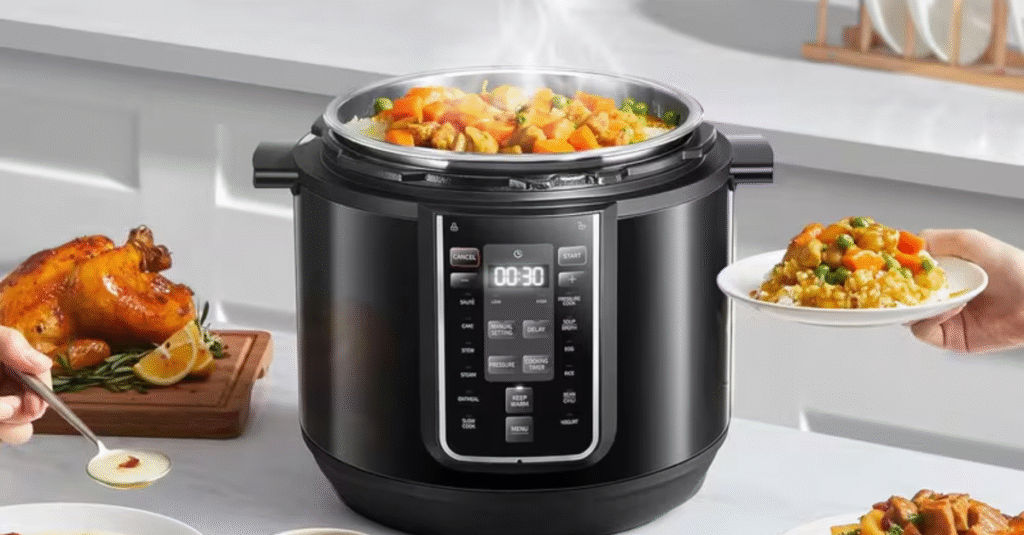
Here’s the part that actually saves money and cupboard space. This single machine works as:
- A pressure cooker
- A rice cooker
- A slow cooker
- A steamer
- A yogurt maker
- A sauté pan
- A sous vide cooker
- A food warmer
- A cake maker
That’s nine jobs done by one pot. Instead of buying separate machines for rice, yogurt, and slow cooking, everything runs through the same base. Less clutter, less washing up, and one manual to remember instead of five.
Think about what a normal kitchen setup looks like without this. A rice cooker on one shelf. A slow cooker taking up half a cupboard. A yogurt maker used twice and forgotten. A separate steamer basket that never quite fits anywhere. Each one needs its own cord, its own spot to store, and its own cleaning routine. Replacing all of that with one pot isn’t a small convenience. It changes how much space a kitchen actually needs.
Nine Functions, One Machine
Here’s the part that actually saves money and cupboard space. This single machine works as a pressure cooker, rice cooker, slow cooker, steamer, yogurt maker, sauté pan, sous vide cooker, food warmer, and cake maker nine jobs done by one pot instead of buying separate machines for each task.
What Each Mode Actually Does
Pressure cooking handles the heavy lifting curries, stews, beans, anything that normally takes hours on a stove. Rice mode runs on its own timing, so there’s no standing over it waiting for water to absorb. Slow cook mode works the opposite way, taking its time for dishes that need low heat over several hours. Steaming keeps vegetables or fish moist without extra oil, and the yogurt setting ferments milk overnight without needing a separate machine just for that one job.
Why One Pot Beats Five Separate Ones
Think about what a normal kitchen setup looks like without this. A rice cooker on one shelf. A slow cooker taking up half a cupboard. A yogurt maker used twice and forgotten. Each one needs its own cord, its own storage spot, and its own cleaning routine. Replacing all of that with one pot isn’t a small convenience it changes how much space a kitchen actually needs.
Where This Fits Into a Weekly Routine
Families who batch-cook on weekends get the most out of this. Cook a curry on Saturday, keep it warm through dinner, then switch to yogurt mode overnight for Monday’s breakfast. The pot barely stops working, and neither does the person using it. For anyone comparing setups through AHRDeals’ picks for kitchen essentials, this kind of flexibility is usually what separates a good buy from a forgettable one.
Built to Last: Materials and Construction
A pot is only as good as what it’s made from, and this is where a lot of cheaper cookers fall apart, sometimes literally. The inner pot uses 304 stainless steel, a food-grade material chosen because it doesn’t react with acidic foods like tomatoes or vinegar-based sauces. Cheaper cookers often use aluminium or thin coatings that scratch off within months, letting metal touch food directly. 304 stainless steel resists corrosion, doesn’t hold onto smells from previous meals, and handles high heat without warping. It also means no non-stick coating to worry about flaking into your food over years of use. For anyone who’s replaced a scratched-up rice cooker pot before, this detail matters more than it sounds.
The outer shell is solid enough to sit on a counter without wobbling, and the lid mechanism feels sturdy rather than flimsy. None of this shows up in a spec sheet the same way “12 presets” does, but it’s the difference between a pot that lasts five years and one that needs replacing after one.
7.6 Litres Means Real Family Meals
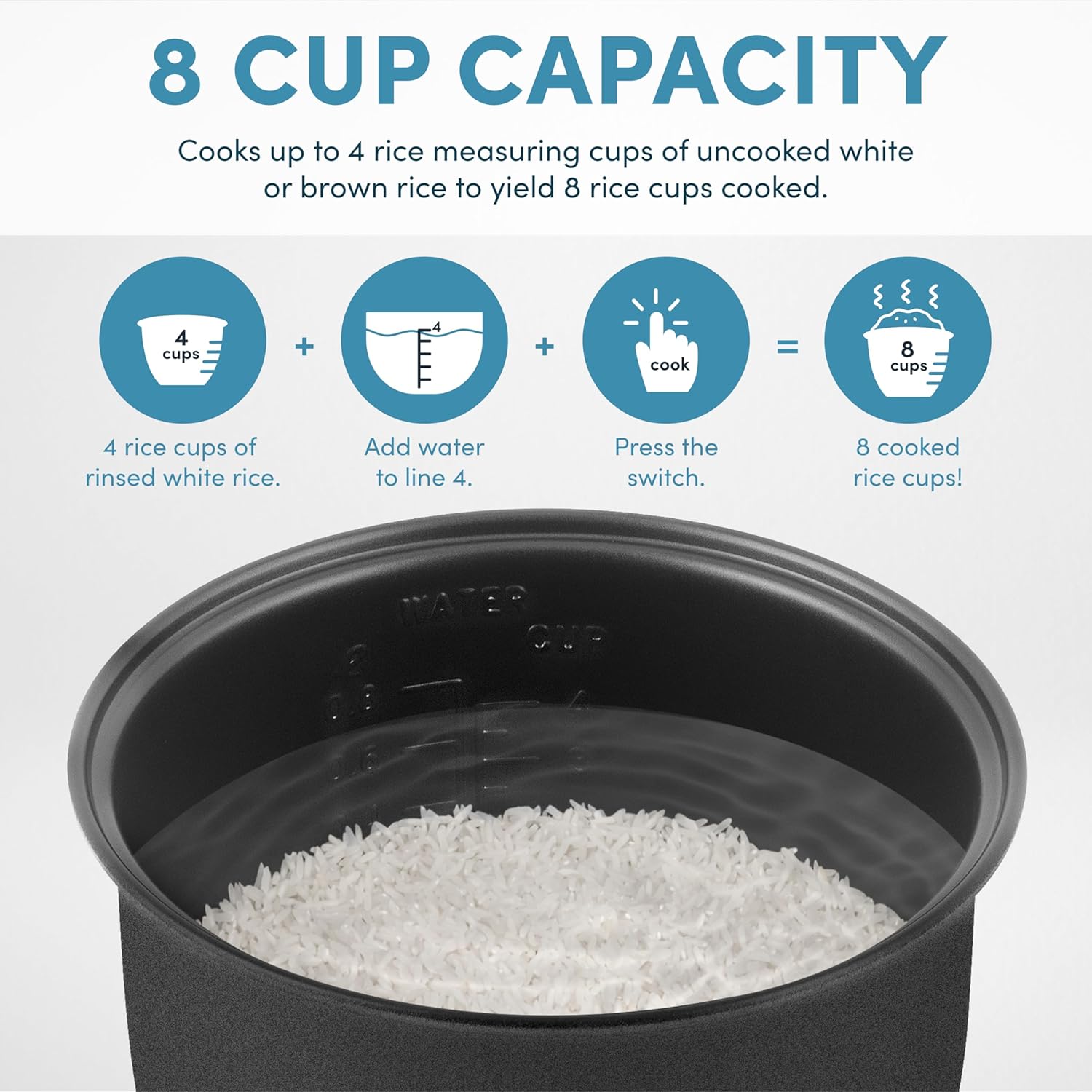
Capacity matters more than most buyers realise until they’re stuck cooking dinner in two batches. A small pressure cooker looks fine on paper, then falls short the first time you try to feed six people or freeze meals ahead. This model avoids that problem outright. Its stainless steel inner pot holds enough rice for around 14 servings, roughly 28 bowls once cooked. That’s not a small win. Anyone cooking for a household, prepping lunches for the week, or hosting a dinner party won’t need to run the pot twice.
Compare that to a standard 3-litre pressure cooker, which barely covers two adults without leftovers. Doubling or tripling a recipe in a small pot usually means overflow risk or uneven cooking. A bigger, properly designed pot like this one removes that ceiling entirely.
Ten Safety Features Nobody Wants to Think About Until They Need Them
Pressure cookers earned a scary reputation years ago, mostly because older models lacked proper safety systems. Steam pressure without controls has caused real accidents, and that fear still lingers for a lot of buyers, even ones who’ve never had a bad experience themselves. This model addresses that directly with ten built-in safety features, including overheat protection and a lid-lock system that won’t open while pressure remains inside the pot. The lid physically cannot be removed until pressure drops to a safe level, which removes the guesswork completely. No second-guessing whether it’s safe to check on dinner early.
Auto shut-off kicks in once cooking finishes, so there’s no need to hover nearby or set a separate timer just to catch the moment it’s done. For anyone who’s been nervous about pressure cooking before, the MIDEA 7.6L Pressure Cooker removes most of the reasons to worry, and that alone opens up pressure cooking to people who’ve avoided it for years.
A Digital Display That Doesn’t Need a Manual
Some multi-cookers pack in features nobody can actually use because the controls are confusing. Tiny buttons, unclear icons, a manual you have to keep nearby for the first month just to remember which button does what. This one uses a clear digital display that shows the cooking mode, remaining time, and current settings at a glance. Presets are labelled instead of numbered, so choosing “rice” or “soup” doesn’t require memorising a code. Anyone who can operate a microwave can figure this pot out within the first use. There’s something to be said for a kitchen appliance that doesn’t fight you.
The 24-Hour Delay Timer Changes How You Plan Meals
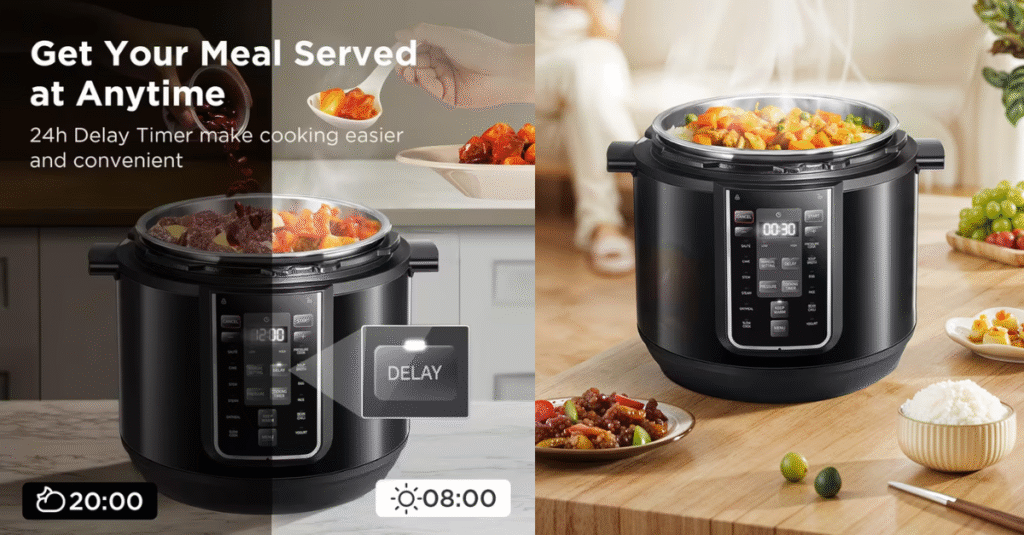
This feature quietly does more work than people expect. Set the timer before leaving for work in the morning, and dinner is ready the moment you walk through the door. No rushing home to start cooking, no ordering takeaway because there wasn’t time left in the evening. Meal prep gets easier too. Load the pot the night before, set the delay, and wake up to breakfast that’s already cooked. Busy households benefit the most here, especially anyone juggling work, school runs, and everything squeezed in between.
If you’re rebuilding your kitchen setup around appliances that actually save time, it’s worth browsing AHRDeals’ full appliance lineup before settling on just one piece. A pot this flexible often changes what else you need to buy afterward.
Getting Started: Your First Few Cooks
New pressure cooker owners sometimes feel unsure about the first few uses, and that’s normal. Start with something simple like rice or steamed vegetables before jumping into a full slow-cooked stew. This builds familiarity with the presets without risking a complicated dish on the first try. Always check the sealing ring sits properly before starting a cook. This small rubber ring is what holds pressure inside, and a loose one is the most common reason a pressure cooker underperforms. Water level matters too. Too little liquid and the pot may not build pressure correctly. Too much and rice can turn mushy.
Once the basics click, moving into yogurt making, sous vide, or cake baking feels far less intimidating. Most people find their second week with the pot far smoother than the first.
Cleaning Takes Minutes, Not an Evening
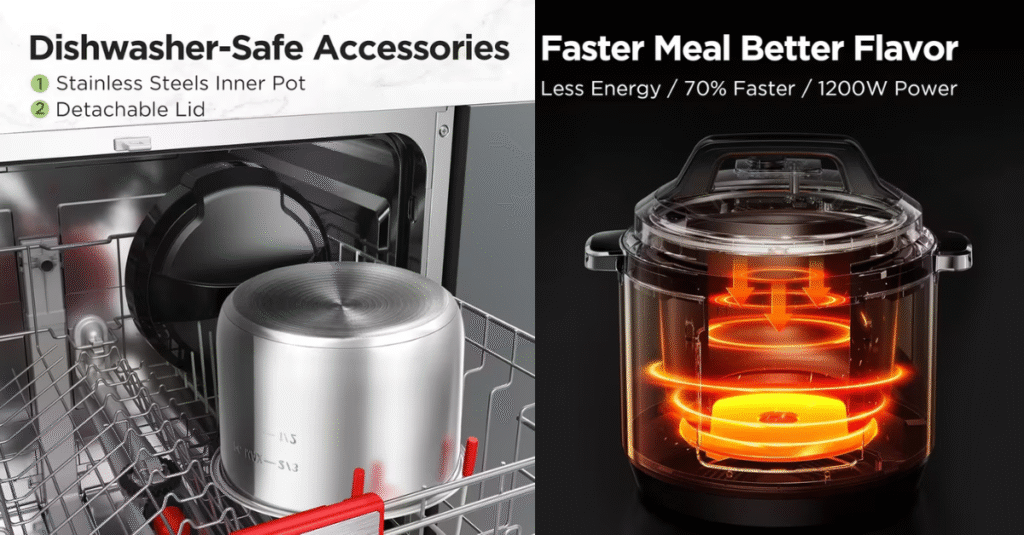
Nobody enjoys scrubbing a pot after a long day of cooking. The 304 stainless steel inner pot resists sticking, and since it’s dishwasher safe, most of the cleanup is hands-off. Rice residue, sauce splatters, and stuck-on bits from slow cooking all come off without much effort. The exterior wipes clean with a damp cloth, and the digital panel doesn’t collect grime the way physical dials tend to. Compared to juggling five separate appliances, each with their own cleaning quirks, this single pot cuts cleanup time by a wide margin. Fewer parts also means fewer places for grease and food to hide.
Is It Worth the Price?
This is the question that actually decides most purchases, so it deserves a straight answer. Basic pressure cookers with no extra functions cost noticeably less. But add up the price of a separate rice cooker, slow cooker, yogurt maker, and steamer, and the total quickly passes what this single pot costs.
Cost Comparison vs Buying Separately
Add up the price of a separate rice cooker, slow cooker, yogurt maker, and steamer, and the total quickly passes what this single MIDEA 7.6L Pressure Cooker costs. That math changes the entire value picture. You’re not just paying for a pressure cooker you’re paying for nine appliances folded into one purchase, one warranty, and one spot in the kitchen.
Who Actually Saves Money Here
For anyone who would have bought two or three separate machines anyway, this ends up being the cheaper route, not the pricier one. The higher upfront cost compared to a bare-bones pressure cooker makes sense once framed this way. It’s not competing with a basic £20 cooker it’s replacing an entire shelf of gadgets. Someone who only ever cooks rice, though, won’t recover that value the same way.
Where It Falls Short
No product is perfect, and it’s worth being honest about the two things buyers mention most. First, it runs larger and heavier than a basic pressure cooker, so counter space and storage matter before buying. Second, the price sits higher than bare-bones pressure cookers that only do one job. Neither point outweighs what the pot offers, but both are fair to know upfront.
Who Should Actually Buy This
Families cooking for four or more people get the clearest benefit, simply because the 7.6 litre capacity removes the need to cook in batches. Anyone who meal-preps for the week will also find the delay timer and multiple functions genuinely useful, not just marketing language. People short on kitchen space benefit too, since one pot replacing nine appliances frees up real cupboard room. And for anyone nervous about pressure cooking safety, the built-in lid-lock and auto shut-off make this an easier entry point than older-style cookers.
On the other hand, someone cooking for one or two people, with no interest in slow cooking, yogurt making, or batch prep, might find a smaller and cheaper pot does the job just as well. Buying more machine than you’ll use rarely makes sense, no matter how good the deal looks.
The Full Picture
Pulling everything together, the MIDEA 7.6L Pressure Cooker covers rice, slow cooking, steaming, yogurt, sautéing, sous vide, warming, and even cake making inside one 7.6 litre stainless steel pot. Twelve presets and sixteen programmable functions handle most weekday meals without extra thinking. Ten safety features, including a lid-lock system, remove the main worry that keeps people away from pressure cooking. A 24-hour delay timer means meals can be ready before you’re even home, and a dishwasher-safe pot keeps cleanup short.
For a full breakdown of specs, pricing, and current stock, the dedicated product page for this pressure cooker has everything laid out in one place.
Pairing this pot with a good spice grinder rounds out a kitchen setup nicely, especially for anyone cooking curries or slow-simmered dishes regularly. Worth a look at grinders that work well alongside a pressure cooker like this one if that’s part of your routine.
Final Thoughts
A kitchen doesn’t need nine gadgets to cook nine different ways. This pot proves that one well-built machine can carry the weight of an entire cupboard’s worth of appliances, and it does it without complicated controls or a confusing manual. If capacity, safety, and genuine multi-use function matter more than a rock-bottom price tag, it earns its spot on the counter. For households cooking for more than two people, it’s hard to find a better all-in-one option right now.
Ready to simplify your kitchen?
Curious how these picks get chosen in the first place? Here’s a look at how products get tested and selected before making it onto the site. And for more honest breakdowns like this one, there’s a growing list of guides worth checking whenever you’re deciding what’s actually worth buying.
Frequently Asked Questions
1. What can this pot actually cook?
It handles rice, curries, soups, stews, yogurt, cakes, and steamed dishes. Nine functions live inside one pot, so switching between meals doesn’t need a different appliance each time.
2. Is 7.6 litres too big for a small family?
Not really. The pot handles smaller batches just fine, and the extra room only matters when you decide to cook more. It’s better to have space you don’t always use than to run out mid-meal.
3. Does this pressure cooker have safety features?
Yes, ten of them. The lid locks shut while pressure builds and won’t open until it’s safe. Overheat protection and auto shut-off also kick in on their own, so nothing needs constant watching.
4. Can I set it to cook later in the day?
Yes. The 24-hour delay timer lets you load ingredients in the morning and come home to a finished meal. It’s one of the most useful parts of owning this pot.
5. Is the inner pot dishwasher safe?
Yes. The 304 stainless steel pot goes straight into the dishwasher, and food doesn’t stick to it much in the first place, so cleanup rarely takes more than a few minutes.
6. How many presets does this multi-cooker have?
Twelve presets cover the most common dishes, and sixteen programmable functions give more control for anyone who wants to fine-tune settings beyond the basics.
7. Is it hard to use for someone who’s never owned a pressure cooker?
No. The digital display labels each mode clearly, so there’s no need to memorise numbers or codes. Most people figure it out within the first cook.
8. Can it replace a slow cooker and rice cooker separately?
Yes, that’s the whole point of the design. One pot handles slow cooking, rice, steaming, and more, which means fewer appliances taking up cupboard space.
9. What’s the biggest downside?
It’s larger and heavier than basic pressure cookers, so counter space matters. It also costs more than stripped-down models, though the extra functions justify the price for most households.
10. Where can I buy the MIDEA 7.6L Pressure Cooker?
It ships through Temu, with delivery from the UK often arriving within one business day.